Immigration, fraud central in Minnesota U.S. House races
National News

Audio By Carbonatix
12:00 PM on Monday, August 10
Andrew Rice
(The Center Square) - Voters in Minnesota will head to the polls to elect party nominees in key Congressional races.
Republicans currently hold an advantage in the U.S. House , with a 218-212 split. There are currently four vacancies in the chamber and one independent congressman, Rep. Kevin Kiley of California.
Here is a look at some of the Congressional races to watch.
District 1
Incumbent Rep. Brad Finstad is seeking a third term in Minnesota’s first congressional district. He was first appointed to the position in 2022.
Finstad has focused his campaign on supporting local farmers. He introduced the USDA Express Loan Act, legislation that would allow the Agriculture Secretary to speed up applications for farm loans less than $1 million.
“I’m proud to introduce this legislation that will cut red tape in the USDA loan process, while expediting access to credit for our farmers who rely on access to capital in order to feed and fuel the world,” Finstad said.
Oliver Morlan, a small business owner, and Gregory Goetzman are challenging Finstad for the Republican nomination. Morlan told The Center Square his campaign is focused on reducing government spending and pursuing greater responsibility.
“This country is being placed into a soon to be irreversible financial situation that will end disastrously for the general public if nothing is done to curtail spending,” Morlan said. “We are spending more on our debt interest payments than the entirety of the Defense budget.”
Goetzman also called for the government to refocus the attention of its spending priorities. He said the U.S. military needed to update its technology to assess adversarial threats.
“All our internal combustion weapons and infrastructure are sitting ducks to drones. And drones are relatively cheap,” Goetzman’s website reads. Our military is the biggest pollution generator on earth. So invest in clean energy. Also, scrap the two and a half trillion so called Golden Dome. It will not protect us.”
Democrats Alex Eaton and Jake Johnson are seeking to party’s nomination to challenge Finstad in November.
Eaton called for healthcare reform as part of his campaign and criticized the country’s current system, which he said disadvantages people. He also called for universal preschool for children ages 3 and 4.
“Universal pre-K costs about 1/12 of the military budget,” Eaton said. “The money is there.”
Johnson focused his campaign on reversing tariff policies from under the Trump administration and pursuing taxes on high-income earners.
“I will support tax cuts for working families and small businesses, paid for by raising taxes and closing loopholes for the super wealthy,” Johnson’s website reads.
Finstad holds a significant lead in fundraising with more than $1.2 million in cash on hand, followed by Johnson with slightly more than $1 million.
Finstad received $5,000 from Raymond Ames, founder of Ames Construction, $4,000 from Lockheed Martin PAC and $2,500 from the Chevron Employees PAC.
Johnson received $6,000 from Craig Wildfang, an attorney at Robins Kaplan LLP, and $3,500 from Daniel Qu, a quantitative researcher at Optiver.
District 2
Rep. Angie Craig, D-Minn., is running for U.S. Senate, leaving Minnesota’s second congressional district with several candidates vying for nomination in her place.
Minnesota Sen. Eric Pratt is the only Republican seeking the party’s nomination. He has focused his campaign on lowering taxes, cracking down on fraudulent activity and enforcing public safety protections.
“Parents deserve a voice in the decisions affecting their children’s education, health, and future,” Pratt’s website reads. “I’ll continue fighting for constitutional freedoms, local control, and practical leadership that puts families first.”
Three Democrat candidates are in the lead to take the party’s nomination; Matthew Klein, Matt Little and Kaela Berg.
Klein, who has served in the Minnesota Senate since 2016, has focused his campaign on touting legislative history. He highlighted bills introduced to crack down on fraud lowering prescription drug costs.
“Matt has passed laws protecting Minnesotans from financial fraud and predatory lending,” Klein’s website reads.
Berg, a member of the Minnesota House since 2022, has highlighted her past experience on state healthcare programs as a motivating factor in improving the quality of care in the state.
“Make government-funded health insurance available to anyone. Employment, marriage, or luck will no longer dictate your right to affordable, accessible, and quality care,” Berg’s website reads.
Little formerly served as a Minnesota senator and the mayor of Lakeville. He focused his campaign on pushing forward Medicare For All, placing a moratorium on AI data centers and ending Citizens United.
“I’m running for the underdogs, for families struggling to get ahead, and for my home district, where I was raised and now raise my family,” Little’s website reads.
Klein leads with more than $288,000 in cash on hand, followed by Pratt with $254,000. Little has $127,000 and Berg has $47,000.
Klein received $5,000 from the American Hospital Association PAC and $3,500 from Ronaldo Steinberg, an executive at Servenco Management. Pratt received $5,000 from the National Automobile Dealers PAC and another $5,000 from the Koch PAC.
Little received $3,000 from the National Nurses PAC and Berg received $3,000 from the Silicorn Valley PAC.
District 5
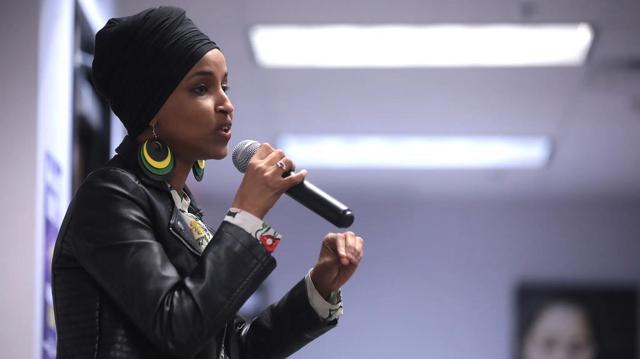
Rep. Illhan Omar, D-Minn., is seeking reelection to a fifth term in her Minnesota congressional district after undergoing renewed national attention over the last several months.
Omar called for abolishing ICE, lowering prescription drug costs and stopping Trump’s military powers in Iran.
“There is no reforming an agency that will ignore the Constitution and kill Americans and prevent any meaningful investigation into their deaths. ICE must be abolished,” Omar said.
Latonya Reeves, a probation officer, and Julie Le, an attorney, are challenging Omar.
Both Reeves and Le have called for immigration reform to a lesser extent than Omar. The two candidates said they would approach the seat in a more moderate position.
“We must work to hold federal agents accountable, and trim their budget back to previous levels,” Reeves wrote on her website.
Le served as an attorney during Operation Metro Surge, a Trump administration effort to ramp up immigration enforcement in Minnesota.
“I've seen the shortcomings of our immigration system from the inside. I've stood in courtrooms and navigated the bureaucratic red tape that hinders dedicated officers and leaves families in uncertainty,” Le said. “We need a leader who not only understands the law but knows how to reform it so it works for everyone.”
The Democratic nominee is expected to face Dalia Al-Adiqi, a leading Republican candidate who has focused her campaign on targeting fraud in federal programs.
“I will push for real oversight, transparency, and accountability so taxpayer dollars are protected and go to the people who truly need help, not fraudsters gaming the system,” Al-Adiqi’s website reads.
Omar has a massive lead in fundraising with more than $1.3 million in cash on hand, followed by Al-Adiqi with $50,000, Le with $4,000 and Reeves with $1,000.
Polls are open in Minnesota from 7 a.m. to 8 p.m. on Tuesday. For more information, visit the Minnesota Secretary of State at mn.sos.gov. For early results on Election Day, visit thecentersquare.com/minnesota.