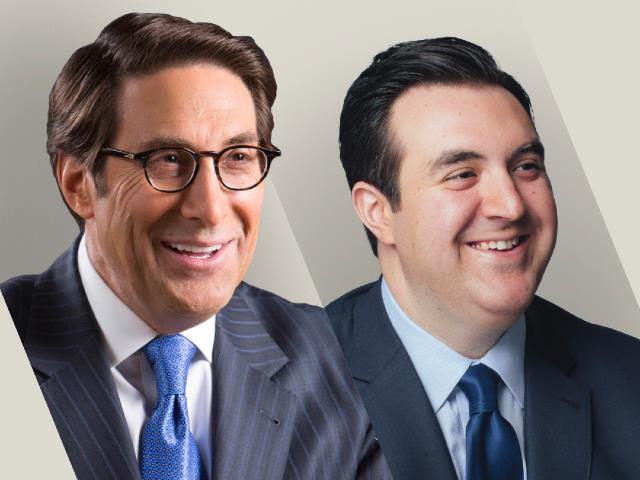
In this segment, cybersecurity expert Morgan Wright discusses the recent cyber attack on a Minnesota water plant, suspected to be orchestrated by Iran. The conversation explores the vulnerability of municipal systems to cyber threats, emphasizing the strategic targeting of infrastructure like water supply systems. Wright explains the tactics, tools, and procedures (TTP) of the attackers, highlighting the role of programmable logic controllers (PLCs) as critical yet unprotected targets. He addresses the potential involvement of other nations, such as China and Russia, in assisting Iran's cyber activities. The segment also delves into the ethical and strategic considerations of cyber warfare, comparing cyber attacks with kinetic attacks and the potential for escalation. Finally, Wright discusses the responsibility for safeguarding municipal systems and the challenges in defending against such sophisticated cyber threats.
Maryland delegate Nic Kipke joins the program to discuss the recent special session called by Governor Wes Moore and the Democrats. The focus of the session is redistricting, a contentious issue that has long plagued Maryland politics. Kipke expresses his disappointment in the partisan gerrymander that he believes silences the minority party's voice and undermines democracy.
Kipke explains that Maryland has been at the forefront of gerrymandering, with efforts to eliminate free elections and rig districts for partisan advantage. He criticizes the current special session, convened during the summer tourist season, as an unnecessary move that burdens the state. The proposed redistricting plans, Kipke argues, aim to completely silence the Republican minority, which he finds immoral and detrimental to the state's democratic process.
The discussion touches on the implications of such partisan politics for Maryland's representation in national affairs. Kipke highlights that having a Republican voice in Congress could benefit the state, especially when Republicans hold power in Washington, DC. He also brings up past instances where partisan actions have backfired, citing examples from other states.
Despite the bleak outlook, Kipke remains hopeful that the Senate will act with integrity and establish an independent commission for redistricting, as opposed to passing partisan maps. He urges Marylanders to engage in the upcoming election, emphasizing the importance of voting and holding leaders accountable.
In an interview, Sully Sullivan discusses pressing issues facing Montgomery County, Maryland, particularly concerning housing discrimination and excessive tax increases. Sullivan, a candidate for County Council District one, criticizes a proposed bill that would prohibit landlords from refusing rentals to individuals who cannot prove legal residency, calling it economically unsound. He also addresses the county’s rising property taxes and wasteful spending, highlighting inefficiencies in the local bus system. Sullivan emphasizes the need for fiscal responsibility and accountability, advocating for a measure that would limit county spending to the rate of inflation unless unanimously agreed upon by council members. His insights reflect broader concerns in suburban areas near major cities, where voters seek common-sense solutions to tax and spending issues.
This episode delves into three pressing topics: the integrity of New Jersey's voting system, Spain's escalating border crisis, and the confirmation process for acting Attorney General Todd Blanche. Legal expert Hans Vons Spakovsky discusses New Jersey's automatic voter registration process, which has resulted in the registration of non-citizens, raising concerns over electoral integrity. The conversation shifts to Spain's border crisis, where thousands of migrants have overwhelmed the country, prompting comparisons to the U.S. border situation under the Biden administration. Lastly, the segment covers the political maneuvering surrounding the confirmation of acting Attorney General Todd Blanche, including the controversial anti-weaponization fund and the arrest of former Olympian David Hearn for damaging the reflecting pool, which is now being dropped due to installation flaws.
Moroccan migrants have recently surged into the Spanish autonomous province of Ceuta, raising significant concerns and drawing comparisons to the immigration challenges faced at the U.S. southern border. The conversation between Dr. Kevin Roberts and Larry O’Connor highlights the implications of Spain's open immigration policies under Prime Minister Pedro Sánchez. The influx of 50,000 people in 24 hours has caused distress among Spanish citizens, who feel neglected by their government’s inadequate law enforcement response.
This crisis underscores the potential consequences of similar policies in the U.S., especially with certain political factions advocating for open borders. The discussion also touches on the cultural and economic impacts of mass migration, the importance of maintaining national identity, and the need for policy reforms to ensure electoral integrity. Dr. Roberts emphasizes the significance of passing the SAVE America Act, which aims to secure voter registration and voting processes, a reform supported by a majority of Americans but stalled in the Senate due to political resistance.
The Department of Transportation, under the leadership of Deputy Secretary Stephen Bradbury, is embarking on significant initiatives to modernize one of the nation's busiest airports, Dulles International Airport. The aging infrastructure, including outdated concourses and people movers, is set for a complete overhaul. Spearheaded by a joint effort with United Airlines and the Metropolitan Washington Airports Authority, the project aims to preserve the iconic main terminal building while transforming the rest of the airport. This ambitious plan, which will be financed through airport authority bonds rather than federal funds, seeks to enhance the travel experience for all Americans, especially those using Dulles as a hub.
The modernization efforts are part of a broader initiative to address safety concerns related to commercial trucking. A new program, Freedom Haulers, targets illegal immigrants with commercial driver's licenses, many of whom pose safety risks due to language barriers and lack of proper training. The program aims to replace these drivers with veterans who have already received specialized training in the military, ensuring safer roads and supporting the trucking industry. This strategic move addresses both a safety and national security issue, while also providing employment opportunities for veterans.
In this segment, Tom Fitton from Judicial Watch discusses the ongoing issue of non-citizens being registered to vote in the United States. Fitton explains that despite claims of stringent measures, numerous non-citizens are found on voter rolls due to insufficient verification processes at driver's license applications. In Virginia, a recent purge removed 6,531 non-citizens who confirmed their non-status themselves. However, the process has been halted within 90 days of an election, raising concerns about potential irregularities during voting. Fitton estimates that millions of non-citizens are registered to vote, with many likely participating in elections. He emphasizes the need for proof of citizenship at the time of registration rather than relying solely on voter ID checks. The conversation also touches on the political implications and potential measures to ensure election integrity.
Dr. Robert Malone, a developer of the mRNA technology for vaccines, shares his insights on Anthony Fauci's recent Senate testimony. Dr. Malone discusses his surprise at Fauci's confrontational demeanor and his decision to invoke the Fifth Amendment. They delve into the legal implications of Fauci's choices and the broader implications for accountability. Dr. Malone highlights Fauci's apparent inconsistencies between public statements and private diaries, pointing out a potential conflict of interest involving a private mRNA venture. He advocates for term limits for powerful bureaucratic leaders to prevent long-standing influence and unchecked power.
Former CDC Director Dr. Robert Redfield discusses his disappointment with Dr. Anthony Fauci's handling of the COVID-19 pandemic, particularly regarding the origin of the virus and the transparency of decision-making processes. Dr. Redfield highlights his belief that the virus was manmade and leaked from a Wuhan lab, contrary to Fauci's public statements. He emphasizes the importance of transparency and public debate in scientific research, criticizing Fauci for suppressing alternative hypotheses and potentially misleading the public. Dr. Redfield also touches on the controversial topic of gain-of-function research and its role in the development of the virus, suggesting that Fauci had a vested interest in concealing the truth. This interview sheds light on the internal conflicts and differing viewpoints within the scientific community during the early stages of the pandemic.
Salem News Channel Today
Sponsored Links
Stay Connected With Us!

Choose which email subscriptions interest you most.
Larry Elder personifies the phrase “We’ve Got a Country to Save” The “Sage from >>Larry Elder personifies the phrase “We’ve Got a Country to Save” The “Sage from South Central” is back on the radio and TV! <<
Hugh Hewitt is one of the nation’s leading bloggers and a genuine media >>Hugh Hewitt is one of the nation’s leading bloggers and a genuine media revolutionary. He brings that expertise, his wit and what The New Yorker magazine calls his “amiable but relentless manner” to his nationally syndicated show . . . . <<
That KEVIN Show: Breaking News for your weekend, a heavy dose of humor, and the >>That KEVIN Show: Breaking News for your weekend, a heavy dose of humor, and the biggest hits. Veteran talk media pro Kevin McCullough lights up your listenership with fresh, unique takes on the days biggest stories, and great conversations with the . . . <<
Salem Media, our partners, and affiliates use cookies and similar technologies to enhance your browsing experience, analyze site traffic, personalize site content, and deliver relevant video recommendations. By using this website and continuing to navigate, you consent to our use of such technologies and the sharing of video viewing activity with third-party partners in accordance with the Video Privacy Protection Act and other privacy laws.Privacy Policy